As a starter a crime is a fact, a legal matter, and it is not an opinion. Some actions that were once considered criminals are no longer considered so as society evolves. Similarly, some previously legal actions may become illegal.
Greed, anger, jealousy, revenge, or pride are all reasons for committing a crime. Some people decide to commit a crime and meticulously plan every detail in order to maximize gain while minimizing risk. These people are making decisions about their behavior; some even believe that a life of crime is preferable to a regular job because it provides greater rewards, admiration, and excitement, at least until they are caught. Others experience an adrenaline rush after successfully committing a dangerous crime. Others commit crimes on the spur of the moment, out of rage or fear.
The goal of punishment is to deter people from committing crimes. Punishment is intended to make criminal behavior less appealing and more dangerous. Many people face significant hardship as a result of their imprisonment and loss of income. Another way to influence choice is to make crime more difficult or to limit the opportunities for crime. This can be as simple as improved lighting, locking bars on auto steering wheels, the presence of guard dogs, or as sophisticated as security systems and credit card photographs.
Some social factors have a particularly strong influence on a person’s ability to make decisions. Medications and One such factor is alcoholism. The desire to commit crime in order to support a drug habit has a significant impact on the decision-making procedure Drugs and alcohol both impair judgment and lower inhibitions (socially defined rules of behavior), giving a person more courage to commit a crime. Long prison sentences, for example, have little meaning when a person is high or drunk. Substance abuse, particularly with alcohol, leads to “stranger violence,” a crime in which the victim has no relationship with his or her attacker.
In summary, there are many kinds of criminals some are intentionally were some are attempted. The causes of crime are multifaceted. Poverty, parental neglect, low self-esteem, and alcohol and drug abuse are all factors that can contribute to people breaking the law. Because of their birth circumstances, some people are more likely to become criminals.
Following Marcos’ deposition in 1986, the newly drafted 1987 Constitution prohibited the death penalty but allowed the Congress to reinstate it “hereafter” for “heinous crimes,” making the Philippines the first Asian country to do so.
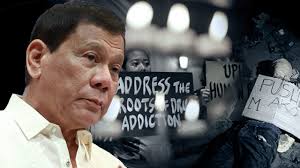
The Philippines’ deteriorating human rights situation worsened this week, as the government began considering bills to reinstate the death penalty. The House Committee on Justice’s action comes just a week after President Rodrigo Duterte used his State of the Nation Address to call for the death penalty by lethal injection for drug offenders.
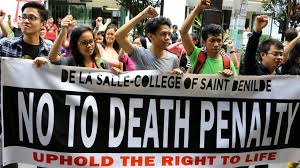
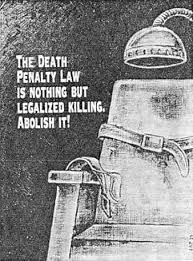
For many years, the Philippines executed people, particularly in cases of so-called heinous crimes. However, under pressure from the Catholic Church, President Gloria Macapagal-Arroyo abolished the death penalty in 2006. Human Rights Watch opposes the death penalty in all circumstances because it is cruel and irreversible.
Because of the Duterte administration’s overwhelming majority in Congress and ongoing efforts to promote its anti-drug campaign, the justice committee is likely to support death penalty legislation. More than 6,000 people have been killed by the Philippine National Police and thousands more by unidentified gunmen as a result of Duterte’s “war on drugs.” Accountability for these police killings, including those involving children, is almost non-existent.
Adopting the death penalty will result in more bloodshed in the name of Duterte’s “drug war,” leading the Philippines deeper into a rights-violating abyss. And the government will lose credibility and leverage in negotiating on behalf of Filipinos facing execution in other countries.
In the Philippines, the Commission on Human Rights (CHR) has stated unequivocally its opposition to the use of the death penalty. In Resolutions issued in 1991 and 1996, the Commission rejected the death penalty advocates’ arguments of deterrence and retribution, warned of the risk of irreversible judicial error, and emphasized that the solution to rising criminality lay in effective law enforcement, equitable administration of justice, and a responsive penal system. In 1996, the CHR reiterated that the Constitution mandated it to monitor the government’s compliance with international human rights treaties, including the ICCPR, and that it would work to ensure that, in accordance with such treaties, the legal procedures and safeguards guaranteeing the rights of those facing persecution were in place.
The death penalty is not a viable solution to the serious problem of criminality in the Philippines. The certainty of arrest, conviction, and long periods of imprisonment, rather than the threat of execution, will act as a deterrent to crime. The frustration and fear felt by many Filipinos as a result of high crime rates deserve a genuine solution, not a short-term palliative offered by the death penalty as a form of retribution. A long-term reform program for the Philippine National Police, criminal investigation agencies, and elements of the judiciary is required. At the moment, law enforcement officers are too frequently perceived as corrupted or responsible for human rights violations, while justice is not seen as being distributed fairly the wealthy and influential are not treated equally in practice.
Therefore, such in preparation for the permanent suspension and eventual abolition of the death penalty, the Government of the Republic of The Philippines should take the lead in the death penalty debate by informing the public about the dangers of the death penalty. Judicial error and the disproportionate use of the death penalty against vulnerable groups The government should launch and explain a program of police and judicial reform aimed at putting a stop to crime.
The government’s efforts to halt the spread of COVID-19 resulted in numerous violations of human rights. President Duterte directed security forces and local government officials to “shoot dead” those who caused “trouble” during the community quarantine. Local officials were charged with putting people in dog cages for alleged quarantine violations.
The UN Human Rights Council (UNHRC) passed a resolution to provide the government with technical assistance and capacity building. The resolution fell short of calls for stronger action to address the country’s ongoing violations.
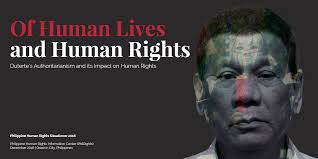
A story to tell is that the Philippines’ human rights crisis has worsened since President Rodrigo Duterte took office in June 2016, as Duterte has continued his murderous “war on drugs” in the face of mounting international condemnation.
In March, Duterte announced that the Philippines would withdraw from the International Criminal Court (ICC) “effective immediately” in response to the ICC’s decision in February to launch a preliminary investigation into “drug war” killings to determine whether a full-fledged investigation would be opened. Duterte attempted to silence his critics through a variety of means. Senator Leila de Lima, his most vocal critic, remained imprisoned on politically motivated drug charges.
The Duterte administration’s “war on drugs” continued in 2018 and expanded beyond Metro Manila, including the provinces of Bulacan, Laguna, and Cavite, as well as the cities of Cebu and General Santos. From July 1, 2016 to September 30, 2018, the Philippine Drug Enforcement Agency (PDEA) reported that 4,948 suspected drug users and dealers were killed during police operations. This, however, does not include the thousands of other people killed by unidentified gunmen. According to the Philippine National Police (PNP), 22,983 such deaths have been classified as “homicides under investigation” since the “war on drugs” began, though the exact number of fatalities is difficult to ascertain because the government has refused to release official documents about the “drug war.”
In February, the Department of Justice issued a petition accusing more than 600 people including United Nations Special Rapporteur on the Rights of Indigenous Peoples Victoria Tauli-Corpuz and dozens of leftist activists of being members of the Communist Party of the Philippines (CPP) and its armed wing, the New People’s Army (NPA). This action put those people in danger of being executed extrajudicially. Tauli-Corpuz called the accusation “baseless, malicious, and irresponsible,” and a Manila court removed her name from the petition in August. In March, Philippine presidential spokesman Harry Roque claimed that “some human rights groups have become unwitting tools of drug lords to stymie the administration’s progress.” This echoed remarks made days earlier by Foreign Affairs Secretary Alan Peter Cayetano.
Imposing drug testing on schoolchildren at a time when Philippine police are summarily killing alleged drug users puts children in danger if they fail the drug test. Mandatory testing may also violate children’s rights to bodily integrity, constitute an arbitrary intrusion into their privacy and dignity, and discourage children from attending school for reasons unrelated to any academic performance. Since the start of the “war on drugs” in June 2016, police have killed dozens of children, deaths that Duterte has dismissed as “collateral damage.” In February, police arrested three police officers involved in the execution-style summary killing of 17-year-old Kian Lloyd delos Santos in August 2017.
The Philippine House of Representatives proposed new regulations in May that would allow Congress to prohibit reporters from covering the national legislature who “sully” the reputation of lawmakers. Journalists and members of Congress have slammed the proposed rule as dangerously ambiguous and suffocating. In 2018, six journalists were assassinated by unidentified gunmen in various parts of the country.
The Philippines is experiencing Asia’s fastest-growing HIV epidemic. The number of new HIV cases increased from 4,400 in 2010 to 12,000 in 2017, the most recent year for which data were available, according to the Joint United Nations Programme on HIV/AIDS (UNAIDS). Up to 83 percent of new infections occur in men and transgender women who have sex with men. An estimated 68,000 Filipinos are now infected with HIV. This rise has been attributed to the government’s failure to respond to the epidemic through policy. According to Human Rights Watch research, many sexually active young Filipinos have little or no knowledge about the role of condoms in preventing sexually transmitted diseases because, among other things, the government fails to promote condoms aggressively.
In June, the Philippines Supreme Court heard a long-awaited argument that could pave the way for same-sex marriage in the predominantly Catholic country. The city of Mandaluyong passed an ordinance in May to protect the rights of lesbian, gay, bisexual, and transgender (LGBT) people, the latest in a slew of similar local laws passed across the country.
Therefore, The International Criminal Court (ICC) prosecutor announced in February that she would open a preliminary investigation into the “drug war” killings in the Philippines. The Duterte administration reacted by withdrawing from the Rome Statute, which goes into effect in a year. The European Parliament passed a resolution in April calling on the Philippines to end the drug war and ensure accountability, and on the EU to use all available means, including suspending trade benefits, to persuade the Philippines to change its abusive behavior.
Philippines has been shouting about this issue since mentioned by some politicians and leaders as a promise that this is an answer to the Filipinos political and economic problem.
But let us find out if this is the only way that Filipinos could have its long promise of progressive and a developed Philippines.
According to the article by Rizal G. Buendia entitled “The Prospects of Federalism
inthePhilippines: A ChallengetoPolitical
Decentralizationof theUnitary State” The issue of maintaining a unitary state in the face of tribal minorities’ desire for autonomy and the constitutional mandate to devolve power to meet the needs of local governments must be seriously addressed for political decentralization to be effective. Whether political and administrative autonomy can be substantially accommodated and enjoyed by local governmental units (LGUs) under a unitary system remains a policy issue. However, if the current policy of a unitary system becomes a structural impediment to the promotion of local autonomy, political re-structuring of the Philippine governmental system becomes a national issue.
Whereof, The ongoing quest for significant autonomy among LGUs, as well as the recent The establishment of autonomous regions in the Cordillera and Muslim-Mindanao remains a possibility. The unitary system faces a challenge in achieving authentic self-government and self-determination in the context of our people’s diverse systems and idiosyncracies. The government continues to be the people’s central institution, expected to serve as a catalyzing instrument in achieving national unity and resolving regional socioeconomic imbalances throughout the country. The national government was the primary and consistent initiator of decentralization policies in an attempt to transform local governments into “effective instruments through which people can, in a most genuine fashion, govern themselves and work out their own destinies.”
It has become necessary due to the limited and eroding sources of local revenue (tax and non-tax). It is extremely difficult for local governments to fund their own development. This challenge compel Local governments must rely heavily on the national government to catalyze and transform their communities into self-sufficient ecoi.omies. Because of the central government’s prevailing control over economic and financial resources, local units’ taxing power under the Constitution may be rendered completely ineffective. Furthermore, the national government’s authority over local financial management is reflected in the income and budgeting policies provided primarily by the Office of Finance (OaF) and the Office of Budget and Management (OBM).
Furthermore, the national government has control over local financial management. Is reflected in the policies implemented primarily by the I iepartment of Finance (OaF) on the income and budgeting side, and the Department of Budget and Management (OBM) on the expenditure side. The OaF develops most local revenue-generation policies and controls many aspects of local finance. Despite the authority and power granted to local executives and local councils by the Local Government Code to determine, control, and approve local budgetary requirements, the aforementioned national agencies continue to exercise authority and power through “reviews” of local budgets and expenditures.
“Illusionary decentralization” appears to manifest itself when the “formal” Powers or administrative arrangements are ostensibly decentralized, but this is not the case politically. The center controls or influences everything.
Therefore, While federalism promotes democracy, centralism imposes excessive obedience. As Federalism strengthens Philippine nationhood, whereas centralism imposes unity and homogenization. While federalism expresses confidence in the ideals of liberty and freedom, centralism remains a “refuge of fear.” The Philippines’ federal system of government offers a solution to the national question. It is still the citadel for ensuring and guaranteeing democracy. It secures not only the Republic’s sovereignty, but also the future of people’s lives. However, no one should use the name of the people against the people, because they will be judged by history.
Originally the UNCLOS stated that every coastal entitled as a matter of international law to a 200-nm EEZ, plus an additional 150-nm ECS where applicable, drawn from baselines on continental land or islands. In lieu of this additional 150-nm ECS, a coastal state may adopt an ECS of up to 100-nm seaward from the 2,500 meter isobaths.
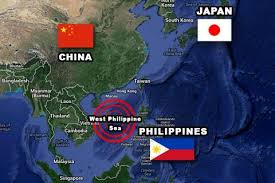
The WEST PHILIPPINES SEA or the SOUTH CHINA SEA disputes started when China claims that they have an “indisputable sovereignty” over all the waters, islands, reefs, rocks, seabed, minerals, and living and non-living resources falling within its 9-dashed line claim. But that 9 dashed line claim of china has similar effects on the EEZs and ECSs of Vietnam, Malaysia, Brunei and Indonesia facing the South China Sea.
China anchors its 9-dashed line claim on so-called “historical rights” but a provision in this 1998 law states, “this Act shall not affect the Historical rights of the People’s Republic of China.” This 1998 law is the first official reference in a Chinese law To China’s “historical rights” to maritime areas outside its EEZ and ECS. Remember that UNCLOS does not recognize “historical rights” as basis for claiming the EEZs or ECSs of other states.
A state can claim “historical rights” over waters only as part of its internal waters or territorial sea. There is no freedom of navigation and no freedom of over-flight in internal waters or territorial sea. There is a right of innocent passage for ships in the territorial sea. The South China Sea, beyond the 12-nm territorial sea of coastal states, has never been considered as the internal waters or territorial sea of any state. Since time immemorial, ships of all nations have exercised freedom of navigation in the South China Sea. Likewise, since the time airplanes flew across the seas, aircraft of all nations have exercised freedom of over-flight over the South China Sea. If the South China were the internal waters or territorial sea of China, then no state could have exercised freedom of navigation and freedom of overflight over the South China Sea. Indeed, China has stated that there is freedom of navigation and freedom of over-flight in the South China Sea, an admission that the South China Sea does not constitute its internal waters or territorial sea.
Scarborough Shoal appeared in the first map of the Philippines issued under the American regime in 1899. Earlier during the Spanish regime, Scarborough Shoal, at that time called Pan cot, appeared in several Spanish Maps of the Philippines starting at least in the 1734 Murillo map. While Scarborough Shoal was outside the Lines drawn in the 1898 Treaty of Paris, Spain and the United States two years later entered into the 1900 Treaty of Washington clarifying that islands to which Spain had “title or claim of title” were also ceded to the United States even though outside the lines drawn in the Treaty of Paris. Thus, Spain ceded Scarborough Shoal To the United States under the 1900 Treaty of Washington. Under the 1935 Constitution, the territories ceded By Spain to the United States under the Treaty of Paris and the Treaty of Washington form part of the Philippine national territory. Under the 2009 amendment to the Philippine Baselines Law, Scarborough Shoal is declared as a Regime of Islands for purposes of determining its baselines.
Nevertheless, it is Clear, that there is nothing “historical” or “right” about China’s 9-dashed line claim because it is fairly recent, without fixed coordinates, ambiguous even to its own legal scholars, inconsistent with its own national law, contrary to the general principles and rules of international law, contrary to UNCLOS, contrary to the Asian-China DOC, and still evolving as recently as this year. Not a single state in the world recognizes, tolerates or acquiesces in to China’s 9-dashed line claim. By asserting their own claims to parts of the waters enclosed by China’s 9-dashed line claim, the other claimant states actually oppose and contest China’s 9-dashed line claim.
Studying is not really an easy thing to do. With all sleepless nights and unhealthy eating habit just to past. Makes it worth it if we indeed extended helps to other people through what we learn. The thing why we work hard and why we should be seriously take our studies? It is for the purpose that someday this could make change.
“Social justice is the view that everyone deserves equal economic, political and social rights and opportunities. Social workers aim to open the doors of access and opportunity for everyone, particularly those in greatest need.” National Association of Social Workers. “Social justice encompasses economic justice.
Mindanao is a place and an island where diverse indigenous people lives. With there rich culture that many wants to preserve. But they will always says that if preserving means being left behind and being abused then they don’t want that. You don’t know your profession might have a great distribution to their development and well being.
Being and wanting to be a lawyer is not really easy. You’re talking and imprinting our country’s laws in your soul. The law school itself has been training their students to be become not just a successful but an effective lawyer in the society. There are many things to learned in law school the top of it is the fact that you’re learning to know your own country.
There is nothing wrong in dreaming big. We should always remember that. Because law and legal profession helps indeed for the Mindanaoans in regards to social justice. By means it helps many of our kababayans who were in the farflangs areas feel and know that they are part of our country, they are citizens and that they are entitled of those Filipino rights vested by our Constitution.



 Site Title