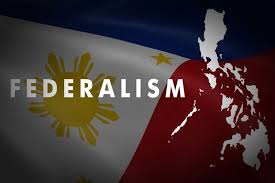
Philippines has been shouting about this issue since mentioned by some politicians and leaders as a promise that this is an answer to the Filipinos political and economic problem.
But let us find out if this is the only way that Filipinos could have its long promise of progressive and a developed Philippines.
According to the article by Rizal G. Buendia entitled “The Prospects of Federalism
inthePhilippines: A ChallengetoPolitical
Decentralizationof theUnitary State” The issue of maintaining a unitary state in the face of tribal minorities’ desire for autonomy and the constitutional mandate to devolve power to meet the needs of local governments must be seriously addressed for political decentralization to be effective. Whether political and administrative autonomy can be substantially accommodated and enjoyed by local governmental units (LGUs) under a unitary system remains a policy issue. However, if the current policy of a unitary system becomes a structural impediment to the promotion of local autonomy, political re-structuring of the Philippine governmental system becomes a national issue.
Whereof, The ongoing quest for significant autonomy among LGUs, as well as the recent
The establishment of autonomous regions in the Cordillera and Muslim-Mindanao remains a possibility.
The unitary system faces a challenge in achieving authentic self-government and self-determination in the context of our people’s diverse systems and idiosyncracies. The government continues to be the people’s central institution, expected to serve as a catalyzing instrument in achieving national unity and resolving regional socioeconomic imbalances throughout the country. The national government was the primary and consistent initiator of decentralization policies in an attempt to transform local governments into “effective instruments through which people can, in a most genuine fashion, govern themselves and work out their own destinies.”
It has become necessary due to the limited and eroding sources of local revenue (tax and non-tax). It is extremely difficult for local governments to fund their own development. This challenge compel
Local governments must rely heavily on the national government to catalyze and transform their communities into self-sufficient ecoi.omies. Because of the central government’s prevailing control over economic and financial resources, local units’ taxing power under the Constitution may be rendered completely ineffective. Furthermore, the national government’s authority over local financial management is reflected in the income and budgeting policies provided primarily by the Office of Finance (OaF) and the Office of Budget and Management (OBM).
Furthermore, the national government has control over local financial management.
Is reflected in the policies implemented primarily by the I iepartment of Finance (OaF) on the income and budgeting side, and the Department of Budget and Management (OBM) on the expenditure side. The OaF develops most local revenue-generation policies and controls many aspects of local finance. Despite the authority and power granted to local executives and local councils by the Local Government Code to determine, control, and approve local budgetary requirements, the aforementioned national agencies continue to exercise authority and power through “reviews” of local budgets and expenditures.
“Illusionary decentralization” appears to manifest itself when the “formal” Powers or administrative arrangements are ostensibly decentralized, but this is not the case politically. The center controls or influences everything.
Therefore, While federalism promotes democracy, centralism imposes excessive obedience. As Federalism strengthens Philippine nationhood, whereas centralism imposes unity and homogenization. While federalism expresses confidence in the ideals of liberty and freedom, centralism remains a “refuge of fear.” The Philippines’ federal system of government offers a solution to the national question. It is still the citadel for ensuring and guaranteeing democracy. It secures not only the Republic’s sovereignty, but also the future of people’s lives. However, no one should use the name of the people against the people, because they will be judged by history.
 Site Title