Originally the UNCLOS stated that every coastal entitled as a matter of international law to a 200-nm EEZ, plus an additional 150-nm ECS where applicable, drawn from baselines on continental land or islands. In lieu of this additional 150-nm ECS, a coastal state may adopt an ECS of up to 100-nm seaward from the 2,500 meter isobaths.
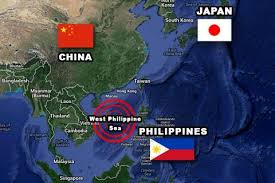
The WEST PHILIPPINES SEA or the SOUTH CHINA SEA disputes started when China claims that they have an “indisputable sovereignty” over all the waters, islands, reefs, rocks, seabed, minerals, and living and non-living resources falling within its 9-dashed line claim. But that 9 dashed line claim of china has similar effects on the EEZs and ECSs of Vietnam, Malaysia, Brunei and Indonesia facing the South China Sea.
China anchors its 9-dashed line claim on so-called “historical rights” but a provision in this 1998 law states, “this Act shall not affect the Historical rights of the People’s Republic of China.” This 1998 law is the first official reference in a Chinese law To China’s “historical rights” to maritime areas outside its EEZ and ECS. Remember that UNCLOS does not recognize “historical rights” as basis for claiming the EEZs or ECSs of other states.
A state can claim “historical rights” over waters only as part of its internal waters or territorial sea. There is no freedom of navigation and no freedom of over-flight in internal waters or territorial sea. There is a right of innocent passage for ships in the territorial sea. The South China Sea, beyond the 12-nm territorial sea of coastal states, has never been considered as the internal waters or territorial sea of any state. Since time immemorial, ships of all nations have exercised freedom of navigation in the South China Sea. Likewise, since the time airplanes flew across the seas, aircraft of all nations have exercised freedom of over-flight over the South China Sea. If the South China were the internal waters or territorial sea of China, then no state could have exercised freedom of navigation and freedom of overflight over the South China Sea. Indeed, China has stated that there is freedom of navigation and freedom of over-flight in the South China Sea, an admission that the South China Sea does not constitute its internal waters or territorial sea.
Scarborough Shoal appeared in the first map of the Philippines issued under the American regime in 1899. Earlier during the Spanish regime, Scarborough Shoal, at that time called Pan cot, appeared in several Spanish Maps of the Philippines starting at least in the 1734 Murillo map. While Scarborough Shoal was outside the Lines drawn in the 1898 Treaty of Paris, Spain and the United States two years later entered into the 1900 Treaty of Washington clarifying that islands to which Spain had “title or claim of title” were also ceded to the United States even though outside the lines drawn in the Treaty of Paris. Thus, Spain ceded Scarborough Shoal To the United States under the 1900 Treaty of Washington. Under the 1935 Constitution, the territories ceded By Spain to the United States under the Treaty of Paris and the Treaty of Washington form part of the Philippine national territory. Under the 2009 amendment to the Philippine Baselines Law, Scarborough Shoal is declared as a Regime of Islands for purposes of determining its baselines.
Nevertheless, it is Clear, that there is nothing “historical” or “right” about China’s 9-dashed line claim because it is fairly recent, without fixed coordinates, ambiguous even to its own legal scholars, inconsistent with its own national law, contrary to the general principles and rules of international law, contrary to UNCLOS, contrary to the Asian-China DOC, and still evolving as recently as this year. Not a single state in the world recognizes, tolerates or acquiesces in to China’s 9-dashed line claim. By asserting their own claims to parts of the waters enclosed by China’s 9-dashed line claim, the other claimant states actually oppose and contest China’s 9-dashed line claim.
 Site Title